Friday, December 6, 2019

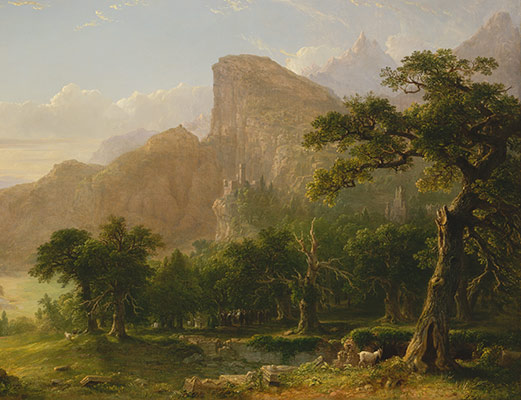
MOVED Day 79 (12/6): Songs of American Romanticism


Warm Up:
Take a few moments to sit quietly.  Consider the silence.  Now consider the sounds that are not there. Consider the sounds that fill your daily experience.

Finally, take a few minutes to write down the sounds that define your existence. Don't be picky, but try to dig deep enough to discover some sounds that might set your existence apart from other people in the world.

Standards:
ELAGSE11-12RL2 Determine two or more themes or central ideas of text and analyze their development over the course of the text, including how they interact and build on one another to produce a complex account; provide an objective summary of the text.
ELAGSE11-12RL9 Demonstrate knowledge of eighteenth-, nineteenth-, and early twentieth-century foundational works (of American Literature, British Literature, World Literature, or Multicultural Literature), including how two or more texts from the same period treat similar themes or topics.
ELAGSE11-12SL1 Initiate and participate effectively in a range of collaborative discussions (one-on-one, in groups,and teacher-led) with diverse partners on grades 11-12 topics, texts, and issues, building on others’ ideas and expressing their own clearly and persuasively.

Essential Questions:
  1. How did the Romantics help create an American mythology?
  2. What role does sound play in our experience of the world?
Agenda:
Homework:
  • Continue work on Walden Journal


Wednesday, December 4, 2019

MOVED Day 77 (12/4): Thanatopsis


Warm Up:
Review "Thanatopsis"

Standards:
ELAGSE11-12RL2 Determine two or more themes or central ideas of text and analyze their development over the course of the text, including how they interact and build on one another to produce a complex account; provide an objective summary of the text.
ELAGSE11-12RL9 Demonstrate knowledge of eighteenth-, nineteenth-, and early twentieth-century foundational works (of American Literature, British Literature, World Literature, or Multicultural Literature), including how two or more texts from the same period treat similar themes or topics.

Essential Questions:
  1. How do form and meaning work together to create powerful writing?
  2. How can we take writing apart (i.e., analyze) without destroying this carefully interwoven fabric?
Agenda:
  • Discussion: Meaning and Form in Poetry and Beyond
  • Read "Thanatopsis"
  • Discuss "Thanatopsis"
Homework:
  • Review "Thanatopsis" for quiz tomorrow

Thursday, November 7, 2019

Day 63 (11/7): Common App Revision


Warm Up:
Common App Weakness Patterns Review

Standards:
ELAGSE11-12W3 Write narratives to develop real or imagined experiences or events
using effective technique, well-chosen details, and well-structured event sequences.
  • Engage and orient the reader by setting out a problem, situation, or observation and its significance, establishing one or multiple point(s) of view, and introducing a narrator and/or characters;create a smooth progression of experiences or events.
  • Use narrative techniques, such as dialogue, pacing, description,reflection, and multiple plot lines, to develop experiences, events,and/or characters.
  • Use a variety of techniques to sequence events so that they build on one another to create a coherent whole and build toward a particular tone and outcome (e.g., a sense of mystery, suspense, growth, or resolution). 
  • Use precise words and phrases, telling details, and sensory language to convey a vivid picture of the experiences, events,setting, and/or characters.
  • Provide a conclusion that follows from and reflects on what is experienced, observed, or resolved over the course of the narrative.

ELAGSE11-12W5 Develop and strengthen writing as needed by planning, revising, editing, rewriting, or trying a new approach, focusing on addressing what is most significant for a specific purpose and audience. 

Learning Intentions (What do we want to 'get'):
  1. Narrative essays use personal stories to illustrate deep lessons about life and growing up.
  2. Good writing uses active verbs, clearly orders the ideas, and links excellent concrete detail to well-reasoned broader themes.
Success Criteria (How do we know we 'got it'):
Compare your essay to This Narrative Essay Rubric

Agenda:
  • Essay Revision Workshop
    • RE-vision means see again, this means you should be willing look at the project from a new perspective, or approach it from a new angle.
    • Final Essay - 650 words or fewer (Resubmit to Google Classroom)
Homework:
  • TTTC, To the End (by Monday)
  • Blog Due Sunday (Unless you published last Sunday)
  • Finish MVRA reviews by Tonight (Award ceremony tomorrow!)
  • Finish Common App Essay Revision by Friday 11/15)

Wednesday, September 4, 2019

MOVED Day 22 (9/3): Writers' Workshop


Warm Up:
Sustained Silent Reading

Standards:
ELAGSE11-12W3 Write narratives to develop real or imagined experiences or events
using effective technique, well-chosen details, and well-structured event sequences.
  • Engage and orient the reader by setting out a problem, situation, or observation and its significance, establishing one or multiple point(s) of view, and introducing a narrator and/or characters;create a smooth progression of experiences or events.
  • Use narrative techniques, such as dialogue, pacing, description,reflection, and multiple plot lines, to develop experiences, events,and/or characters.
  • Use a variety of techniques to sequence events so that they build on one another to create a coherent whole and build toward a particular tone and outcome (e.g., a sense of mystery, suspense, growth, or resolution). 
  • Use precise words and phrases, telling details, and sensory language to convey a vivid picture of the experiences, events,setting, and/or characters.
  • Provide a conclusion that follows from and reflects on what is experienced, observed, or resolved over the course of the narrative.

ELAGSE11-12W5 Develop and strengthen writing as needed by planning, revising, editing, rewriting, or trying a new approach, focusing on addressing what is most significant for a specific purpose and audience. 

Learning Intentions (What do we want to 'get'):
  1. Narrative essays use personal stories to illustrate deep lessons about life and growing up.
  2. Good writing uses active verbs, clearly orders the ideas, and links excellent concrete detail to well-reasoned broader themes.
Success Criteria (How do we know we 'got it'):
Compare your essay to This Narrative Essay Rubric

Agenda:

  • Discuss They Say/I Say, Ch. 1
  • Write Common App Essay Draft
    • 500-650 Words
    • MLA Format
    • Be specific & concrete: Paint a picture of a moment in time
    • Link your personal experience to broad themes/lessons
    • Submit completed draft to Google Classroom
Homework:
  • Educated, part 3 (132-166) due Wednesday
  • They Say/I Say, Ch 1
    • Tuesday: Read and record 3 Takeaways
    • Thursday: Complete Exercises 1 & 2
  • Blog #3 Due Sunday?
  • Practice your Elevator Pitch! We will present them on Friday.

Friday, August 30, 2019

MOVED Day 21 (8/30): Writers' Workshop

Ways to Skin a Cat, Method B

Warm Up:
Sentence Combos, Option A

Standards:
ELAGSE11-12W3 Write narratives to develop real or imagined experiences or events
using effective technique, well-chosen details, and well-structured event sequences.
  • Engage and orient the reader by setting out a problem, situation, or observation and its significance, establishing one or multiple point(s) of view, and introducing a narrator and/or characters;create a smooth progression of experiences or events.
  • Use narrative techniques, such as dialogue, pacing, description,reflection, and multiple plot lines, to develop experiences, events,and/or characters.
  • Use a variety of techniques to sequence events so that they build on one another to create a coherent whole and build toward a particular tone and outcome (e.g., a sense of mystery, suspense, growth, or resolution). 
  • Use precise words and phrases, telling details, and sensory language to convey a vivid picture of the experiences, events,setting, and/or characters.
  • Provide a conclusion that follows from and reflects on what is experienced, observed, or resolved over the course of the narrative.

ELAGSE11-12W5 Develop and strengthen writing as needed by planning, revising, editing, rewriting, or trying a new approach, focusing on addressing what is most significant for a specific purpose and audience. 

Learning Intentions (What do we want to 'get'):
  1. Narrative essays use personal stories to illustrate deep lessons about life and growing up.
  2. Good writing uses active verbs, clearly orders the ideas, and links excellent concrete detail to well-reasoned broader themes.
Success Criteria (How do we know we 'got it'):
Compare your essay to This Narrative Essay Rubric

Agenda:

  • Vocab Quiz #3

Workshop:
  • Read The Great Gatsby
  • Complete Common App Pre-writing reflection
  • Write Common App Essay Draft
    • 500-650 Words
    • MLA Format
    • Be specific & concrete: Paint a picture of a moment in time
    • Link your personal experience to broad themes/lessons
    • Submit completed draft to Google Classroom
Homework:
  • Vocab Quiz #4 (Friday)
  • How To Read Literature Review & Discussion Questions (Due 9/5)
    • Blog #2 Due 9/8
    • Continue Reading Gatsby (Book Test Wednesday)

        Friday, August 23, 2019

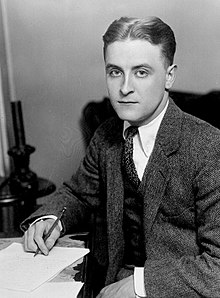
        Day 16 (8/23): Intro to The Great Gatsby


        Warmup:
        Common App Warm up #3

        Standards:

        ELAGSE11-12RL2 Determine two or more themes or central ideas of text and analyze their development over the course of the text, including how they interact and build on one another to produce a complex account; provide an objective summary of the text.
        ELAGSE11-12RL3 Analyze the impact of the author’s choices regarding how to develop and relate elements of a story or drama (e.g., where a story is set, how the action is ordered, how the characters are introduced and developed).

          Essential Questions:
          1. How can historical context help in understanding a text?
          2. What critical lenses are available for textual interpretation?
          Agenda:
            • Vocab Quiz #2
            • Intro to Gatsby
              • As you watch the following videos, jot down details that you find interesting, startling, relevant, or worth paying attention to.


            Homework:
            • Vocab Quiz #3 (Friday)
            • They Say/I Say, Chapter 2
              • Read by Wednesday (3+ takeaways)
              • Answer Questions by Thursday
            • Blog #1 Due 8/25
            • Continue Reading Gatsby